
Caudal Hoof Failure & Poor Horn Quality
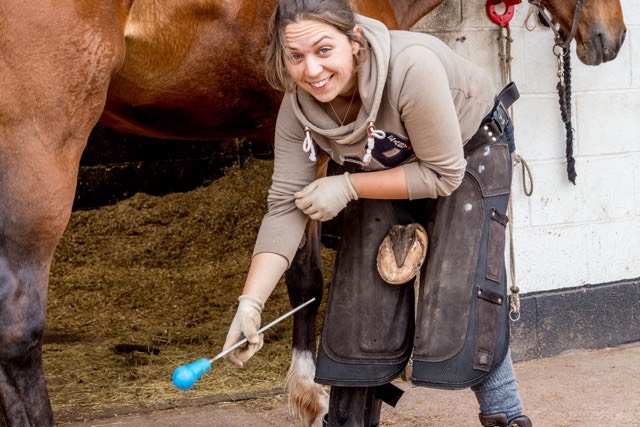
Equine Podiatrist: Emma Baker
Horse: Ginge, 15-year-old Thoroughbred
Ginge (race name Nolser), born in 2002, came to Equine Podiatrist Emma Baker in 2017 when his owner expressed concerns over the quality of his feet. Whilst Ginge was sound at the time, Emma shared her concerns and explained that he was experiencing significant failure of the soft tissue structures at the back of the hoof, resulting in a long toe and a low heel. Ginge was enjoying a quieter life as a happy hacker and whilst an Equine Podiatry approach may enhance performance, it was more important for his owner to promote comfort and longevity for him.

Taking time to improve these structures and raise the back of the foot would see an improvement in the angle of P3, creating better bone alignment and removing undue pressure on the DDFT and navicular structures. This would significantly reduce his risk of developing associated pathologies such as ring bone, navicular and DDFT tearing.
His shoes were removed and an adjustment to his diet was recommended. His feed regime had become rather complicated so we stripped it back to basics and introduced a good quality forage balancer, micronised linseed, a forage-based carrier and salt.
During the first few weeks, Ginge experienced an alarming amount of horn loss where the nails had sat. This resulted in him having very little hoof wall or heels to walk on. This was managed through the use of Cavallo hoof boots and comfort pads. He had a few weeks' rest whilst adjusting but weeks later, Ginge returned to some quiet hacking.

For some time, Ginge seemed to struggle with his monthly trims. An arthritic knee made this particularly tricky, as well as the ground sensitivity he experienced during the early weeks. Emma prides herself on a truly holistic and sympathetic approach and through some trial and error, she found that trimming became markedly more comfortable for him when a block was placed under his supporting limb; assuming the angle change enabled him to soften the bend in his knee and weight his hindquarters more.

We continued as such for many years and saw some lovely results as pictured here. However he continued to struggle with episodes of ground sensitivity. Whilst this was always manageable with boots, we never stopped asking why, especially as the mechanics of his feet improved so significantly. Emma shared concerns about Ginge's lack of appropriate turnout and movement, potentially contributing to his stalled progress.
In 2020, Ginge (and his brothers) moved to a new environment in which his owner was able to gain better control of his needs. A more species-appropriate environment which included living out 24/7 with his brothers, good quality hay and the continued bucket feeds, started to show that improvement in ground sensitivity we had been hoping for.

His new (muddier) environment hasn’t been without its challenges; winter thrush and delicate skin are diligently managed through the wetter months but his significantly improved comfort (including his arthritic knee) leaves his team comforted that the right decision was made.
Ginge continues to enjoy his life as a much-loved companion and friend.


Comments